
Watch in page
Watch this guide
Use the video for visual context, then follow the written steps, tables, and version notes below.
On this page
Beginner priorities at a glance
- Finish the tutorial before leaving the intended route.
- Use story and Contact missions to unlock systems instead of roaming without an objective.
- Learn the mini-map, cover, weapon switching, driving, and police line-of-sight rules.
- Build a balanced three-weapon loadout without upgrading every gun.
- Keep one reliable vehicle and improve useful performance before appearance.
- Preserve premium currency until its recurring sources and high-value uses are understood.
- Join a Crew when cooperative activities become available, but do not skip core progression to do so.
What to do in the first hour
| Order | Action | Why it matters |
|---|---|---|
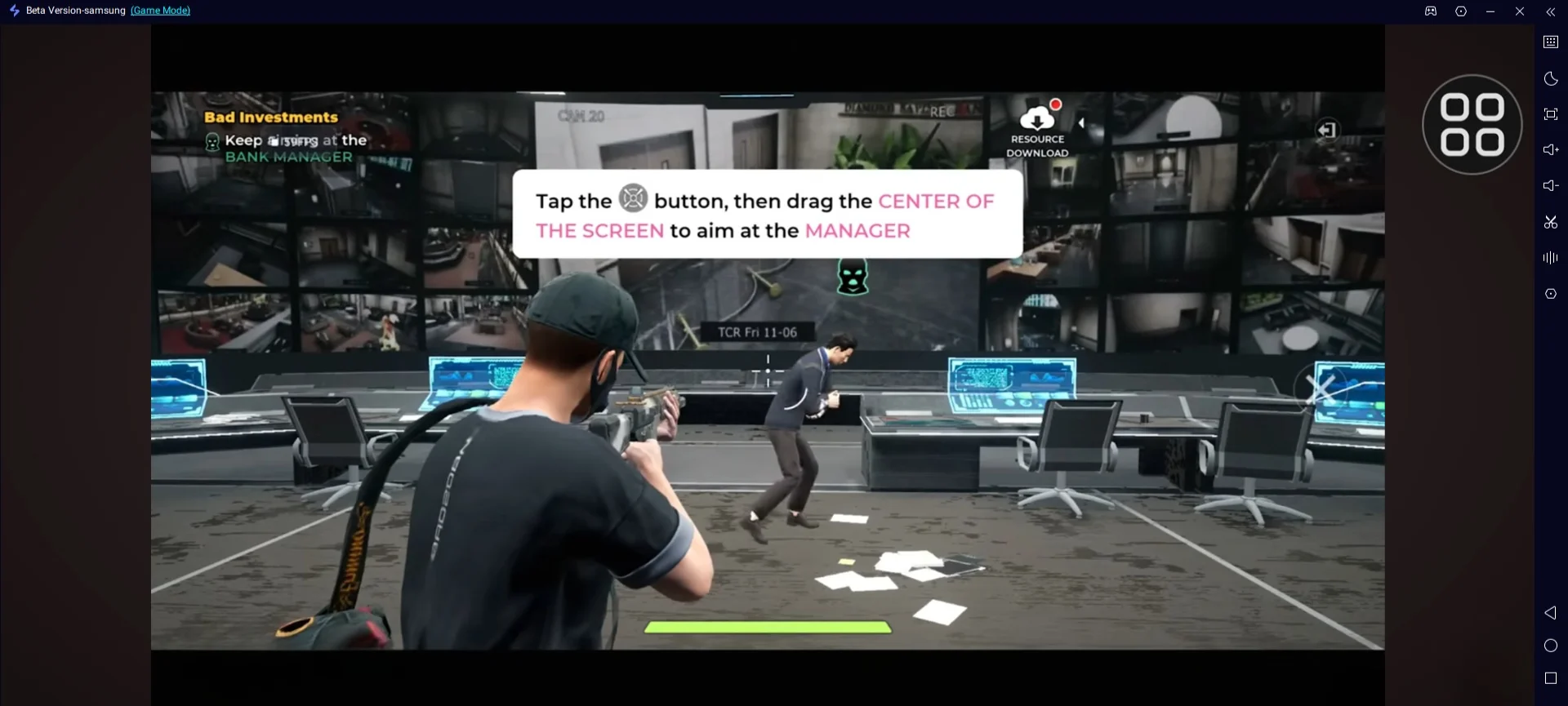
| 1 | Complete the opening heist and tutorial prompts | Introduces movement, shooting, cover, objectives, driving, and police pursuit. |
| 2 | Follow the main objective after the time jump | Restores access to the city and starts the core progression chain. |
| 3 | Secure the first usable vehicle and apartment | Provides mobility and a reliable destination while other systems unlock. |
| 4 | Learn the phone, map, and Contact flow | Shows missions, shops, services, police activity, and available progression. |
| 5 | Build a three-role weapon loadout | Covers backup, general combat, and close-range pressure without spreading upgrades too widely. |
| 6 | Continue story and Contact missions | Community guides consistently identify these missions as the safest route to multiplayer, mail, and other locked systems. |
Combat and controls that matter first
The mobile layout places movement on the left and combat actions on the right. Camera control, the mini-map, and the three weapon slots are the most important interface elements to learn before difficult missions.
- Move between walls, vehicles, and corners instead of trading damage in the open.
- Reposition when several enemies can shoot from different angles.
- Use a pistol as a dependable backup, an AR or SMG for general fights, and a shotgun for close quarters until better-tested loadouts are available.
- Restock ammunition before a long mission or cooperative activity.
- Change one sensitivity or aim option at a time so its effect is easy to judge.
Weapons, vehicles, and upgrade order
Early progression benefits more from reliable tools than from collecting every unlock. A familiar weapon and predictable vehicle reduce failed missions, wasted ammunition, and repeated travel.
| Priority | Recommended approach | Avoid |
|---|---|---|
| Main weapon | Choose one versatile gun and improve it only when the upgrade solves a real combat problem. | Upgrading every newly unlocked weapon. |
| Backup weapons | Cover close range and emergency reload situations with different weapon roles. | Three weapons that compete for the same range. |
| Main vehicle | Favor controllable acceleration and handling for missions and escapes. | Buying only for appearance or claimed top speed. |
| Cash reserve | Keep enough spendable currency for mission-critical ammunition, repairs, or unlocks. | Emptying the balance on cosmetics. |
| Diamonds | Hold premium currency until durable progression value is clear. | Using Diamonds to bypass early impatience. |
Money, businesses, and empire progression
The economy connects underworld businesses, influence, property, vehicles, heists, and territory income. Dirty Money, Clean Money, Money Scrubbing, and the Nixon Corp or Business Prodigy path appear in current game coverage, but the conversion rate and daily limit still need a version-matched in-game check.
- Treat story and Contact missions as the baseline progression route.
- Use clearly marked side jobs, including reported transport activities, for extra rewards only after checking their time and costs.
- Convert or process criminal earnings when the relevant business feature becomes available.
- Expand businesses only after essential combat and mobility needs are covered.
- Compare an activity by net reward and time, not by the largest reward screen.
- Recheck all economy advice after balance or battle-pass updates.
Police, Crews, and the next progression step
Police Wanted Level uses a one-to-five-star pressure scale. PvP Notoriety rises when other players are defeated and can trigger penalties. These are related pressure systems but should not be treated as the same mechanic.
- Break police line of sight and keep moving instead of fighting endless reinforcements.
- Use alleys, turns, buildings, and a controllable vehicle to reduce visual contact.
- Avoid unnecessary PvP until the Notoriety penalties are understood.
- Join a Crew for co-op heists and territory activities after the required systems unlock.
- Prepare weapons, ammunition, a getaway vehicle, and a clear role before joining a team activity.
Common beginner mistakes
- Skipping tutorial prompts and then missing phone, cover, driving, or mission controls.
- Spending premium currency before comparing long-term uses.
- Upgrading too many weapons and vehicles at the same time.
- Treating promotional rarity as proof that an item is best.
- Fighting police after escape has become the safer objective.
- Confusing PvE Wanted Level advice with PvP Notoriety penalties.
- Following an old guide without checking game version and region.
Version and availability notes
Available now: Android and iOS availability, open-world missions, co-op heists, underground businesses, cars, weapons, PvP, Notoriety, emotes, and Director Mode.
May vary by account or version: The opening mission order, apartment and phone sequence, three-slot loadout advice, story-gated mail and multiplayer, transport side jobs, Dirty/Clean Money terminology, Nixon Corp unlock path, and one-to-five-star Wanted Level behavior.
Unlock levels, costs, rewards, conversion rates, and balance values can change by version or region. Follow the current in-game label when it differs.